
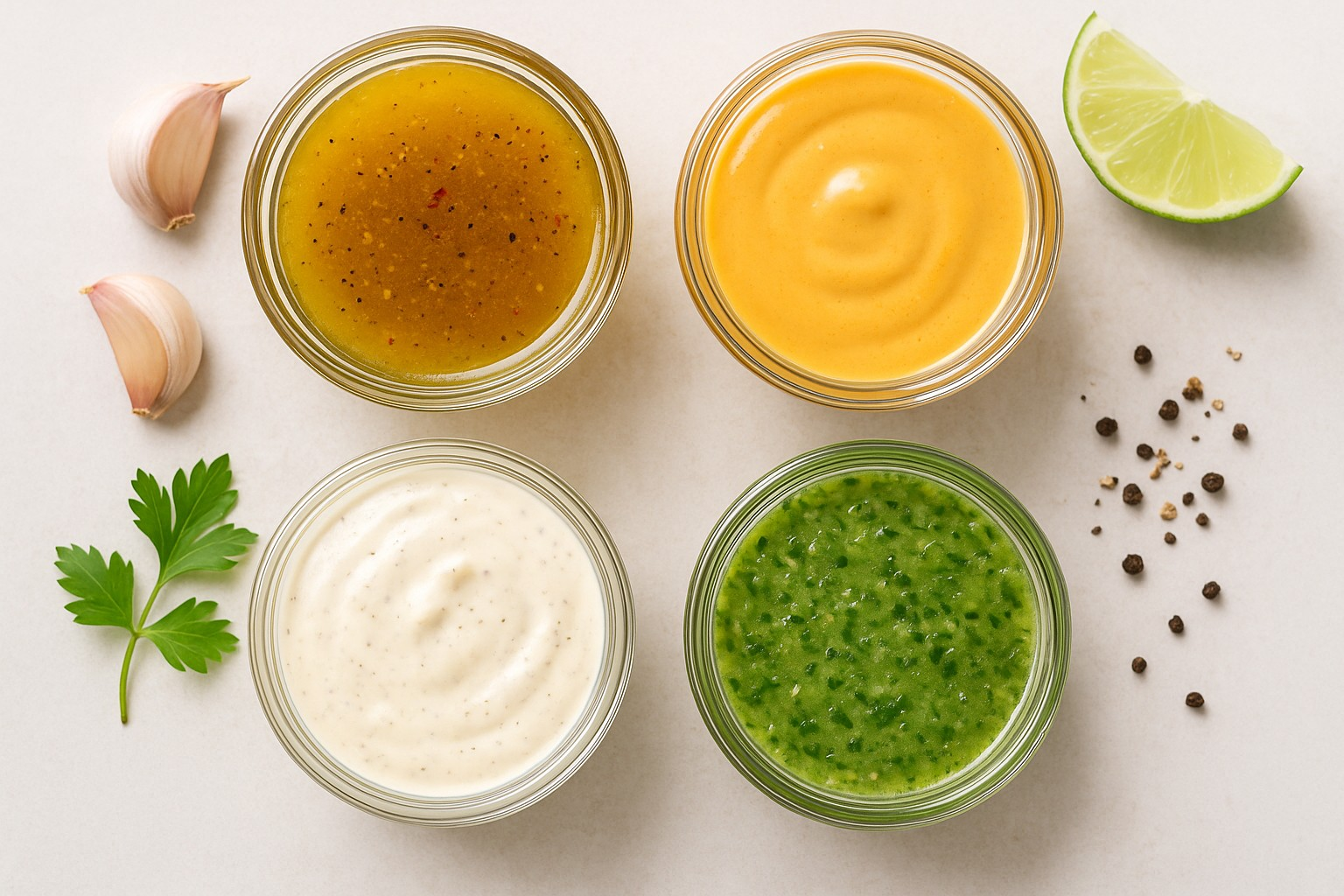
Here’s a blog post for your Recipes category on Casa.app all about salad dressings. It includes an intro and 5 different types, each with bolded headers, plus pros and cons to help your readers make informed (and tasty) choices.
Let’s break down five popular types of salad dressings, their strengths, and what to keep in mind when choosing (or making) them.
Vinaigrette
The classic oil-and-vinegar combo.
Pro: Light, versatile, and easy to make at home with just a few pantry ingredients. It works well with leafy greens, roasted veggies, grains, or even fruit-based salads.
Con: Can separate quickly and may feel too acidic if not balanced properly. Also, it may not offer enough “heft” for heartier salad toppings like chicken or beans unless emulsified well.
Ranch
Creamy, cool, and comfortingly familiar.
Pro: Extremely crowd-pleasing and kid-friendly. Great for salads with bacon, avocado, tomatoes, or crispy toppings. Also doubles as a dip.
Con: Often higher in calories and fat. Store-bought versions can be heavy or overly processed unless you make it fresh.
Caesar
Savory, creamy, and full of umami.
Pro: Perfect for romaine or kale-based salads, especially when topped with croutons and Parmesan. Has a bold flavor that elevates simple ingredients.
Con: Can overpower more delicate greens or veggies. Traditional versions contain anchovy, which may not be appealing to everyone.
Balsamic Glaze or Reduction
Sweet, tangy, and syrupy.
Pro: Adds instant sophistication and works beautifully with fruit, nuts, and cheese (especially goat or feta). A drizzle can go a long way.
Con: Can be too sweet for savory or protein-heavy salads. Doesn’t coat greens evenly, so it works best as a finishing touch rather than the main dressing.
Green Goddess
Herby, creamy, and bright.
Pro: Offers fresh flavor with ingredients like parsley, tarragon, and lemon blended into a creamy base. Ideal for summer salads, grilled vegetables, or even grain bowls.
Con: Less shelf-stable than other dressings, especially if homemade. May not pair well with more traditional or Mediterranean-inspired salads.
Want to mix things up? Try blending your own dressing at home—it only takes a few ingredients and gives you full control over the flavor, texture, and quality. Plus, when your dressing is this good, you might just find yourself actually craving salad.

Comments are closed.